Monitoring and Evaluation


Benefits are already emerging from a commissioning approach where government, non-government organisations and people with lived experience are collaborating to:

  • deliver greater capacity and certainty with longer funding agreements
  • amplify the voices of people with lived experience to inform the service design
  • develop a common understanding of the value of peak organisations and a common set of outcomes achieved by peaks
  • design a service that supports teenagers at risk of homelessness
  • shift to understand advocacy outcomes for disability people’s and carers organisations
  • determine the design of new services for young people when the Minimum Age of Criminal Responsibility is raised

We can see system links strengthening and opportunities arising as the human service system reform and commissioning approach gains momentum – such as:

  • Improving trust and relationships between government and the NGO sector
  • Organic connections between funded services that can be formalised or reinforced like homelessness, alcohol and drug dependence or domestic violence supports
  • Service gaps or misalignment where emerging needs are not effectively met such as the increase in school refusal and the impact on youth services

By the end of 2024 the community will benefit from a human services system that has:

  • At least 32 active commissioning cycles spanning all priority population groups
  • Partnerships with greater flexibility to meet emerging needs
  • More supports available for when challenges emerge

Our commissioning progress is determined by more than the number of active cycles.

As commissioning matures within the ACT Government and across the sector, we will monitor:

  • whole-system reform and how well we deliver the overarching commissioning priorities
  • support provided for commissioning capability and skills development across the government and non-government sector
  • outcomes delivered or commissioned that improve wellbeing through the quantity and breadth of active commissioning cycles across the ACT Government
  • experience of commissioning participants against the shared principles

To guide our progress, we have identified how far we have come, where we are and where we are headed as commissioning matures as a practice and reform through to 2030.

Commissioning Progress

2020-2021

2021-2022

2022–2024

2025-2028

2028-2030

Whole-system reform and priorities

6 Priorities identified

Strategic challenges identified

Strategic challenges to be addressed

Priority progress tracked

Strategic challenges addressed

Strategic challenges addressed

Practice and capability

Cycle phases developed

2 Directorates

Initial resources

3 Directorates

Expanded resources

3+ Directorates

Expanded resources

All Directorates

Expanded resources

Engagement

Developed with service providers and partners

15 initiated cycles

30+ initiated and cumulative cycles

40+ initiated and cumulative cycles

50+ initiated and cumulative cycles

Evaluation*

Evaluation framework developed

Partnering

Service

Partnering

Programs

Service

Partnering

System

Programs

Service

Partnering

System

Programs

Service

Roadmap Roadmap developed 2021 Concepts and Priorities 2024 Progress and Plans 2028 Integration 2030 impact and outcomes
  WE ARE HERE   

(*) Partnering being a growing number of commissioned partnerships that are able to evaluate their relationship; Services or programs being a growing number of commissioned services or programs which are subject to evaluation; System being aspects of the human services system that are able to be evaluated

We began commissioning with clear drivers for change which over our 10-year reform period evolve through the pursuit of the reform priorities to realise the reform outcomes:

  • Better respond to community need, both existing and emerging, through increased flexibility and opportunities for innovation.
  • Improve integration across the service systems to support seamless and holistic care, and transitions between services.
  • Reduce pressure on our hospitals and other crisis services, such as homelessness or statutory services for children, young people, and families, by prioritising prevention and early support.
  • Improve equity in health and life outcomes for priority population groups, through commissioning decisions made about where and how to focus support.
  • Improve sector sustainability through closer partnerships and better understanding the needs of our service delivery partners.

To deliver the outcomes of commissioning as a reform we:

  • undertake clear actions to address the strategic challenges impacting and influencing the delivery of the commissioning priorities; and
  • drive commissioning as a practice through knowledge development and adoption.

The 2024 Commissioning Roadmap outlines the key actions we need to take to keep the 10-year reform on track. We will report on these actions in the next Commissioning Roadmap (2025 to 2028).

We have enhanced the commissioning practice guidance and continue to support each commissioning cycle with resources, advice, and training to drive practice consistency and skills development.

A significant challenge to capability development are the high rates of staff attrition in both the sector and across the ACT Government.  We are actively monitoring skills within government and the non-government sector to identify capability areas to strengthen and improve with tools, advice, and training. Our first 15 commissioning cycles have identified the following key areas to strengthen commissioning skills and capability, which will be the focus of skills development from 2022-2024.

General Understanding

Discover

Strategise

Design

Invest

Deliver

Integrate

Sector

Understanding Commissioning

Partnership Mindset


Providing commissioning input once


Effective Tender Response Writing

Valuable Outcomes Reporting


Community Services Directorate

Planning for collaboration and lived experience involvement

Surfacing what we already know

identifying gaps and needs

Collaborative design and facilitation

Managing multi-year grant rounds

Managing service transitions


Knowledge transfer for the whole system

Outcomes reporting to the whole system

ACT Health Directorate

Other Directorates


We provide skills and capability tools, advice, resources, and links online through the commissioning website, open to both government and non-government organisations.

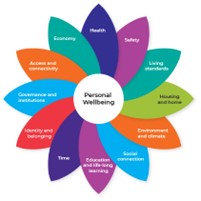
The ACT Wellbeing Framework (the Framework) is made up of 12 domains that matter most to Canberrans when considering their quality of life. The Framework is intrinsically linked to the human services system that seeks to improve the health and wellbeing outcomes for people experiencing challenges and vulnerability within our community.

We have provided clearer linkages to the ACT Wellbeing Framework throughout the 2024 Roadmap to support alignment with the outcomes articulated in this Framework. As commissioning cycles mature through to 2024, advocacy, services, programs, and projects will start to realise the aspirations of the ACT Wellbeing Framework across the Domains.

Personal wellbeing

We track the commissioning experience against the shared principles through a post-activity survey. Participants are given a link to the post-activity survey after each commissioning activity.

To date only 200 participants have provided feedback from 15 active commissioning cycles involving more than 2000 participants. This level of feedback is inadequate to demonstrate meaningful progress against the shared principles. Efforts will be made to increase the participant response rates and transparently indicate progress by 2024.

Page updated: 28 Feb 2024